
Cephalocaudal Growth Pattern
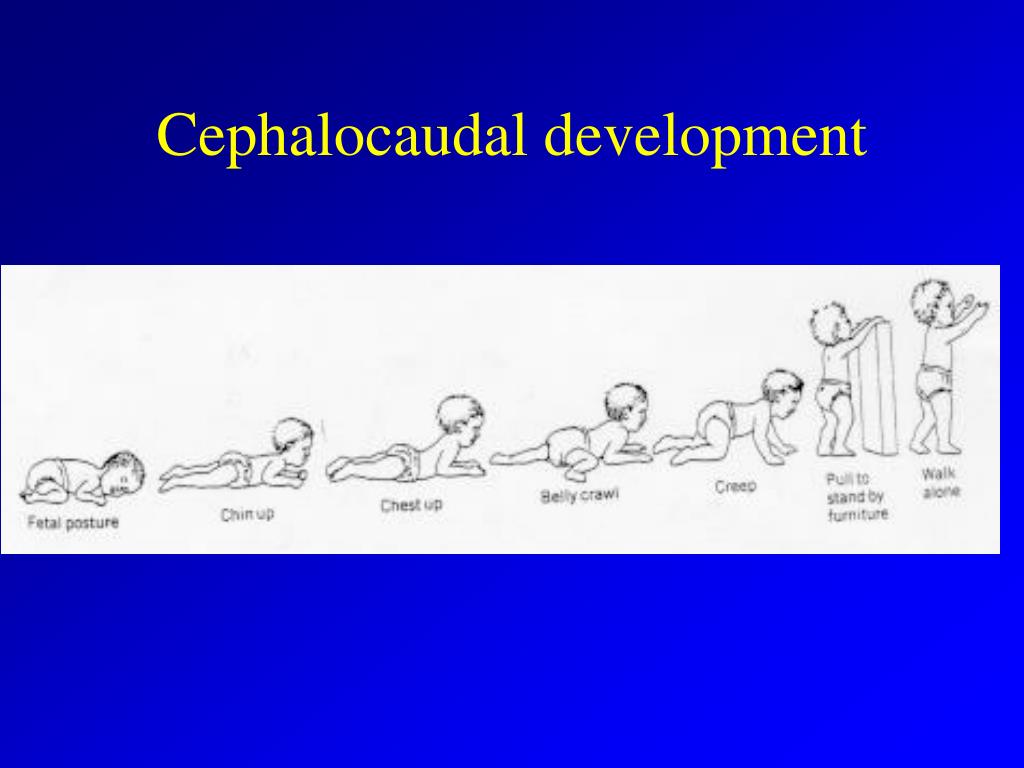
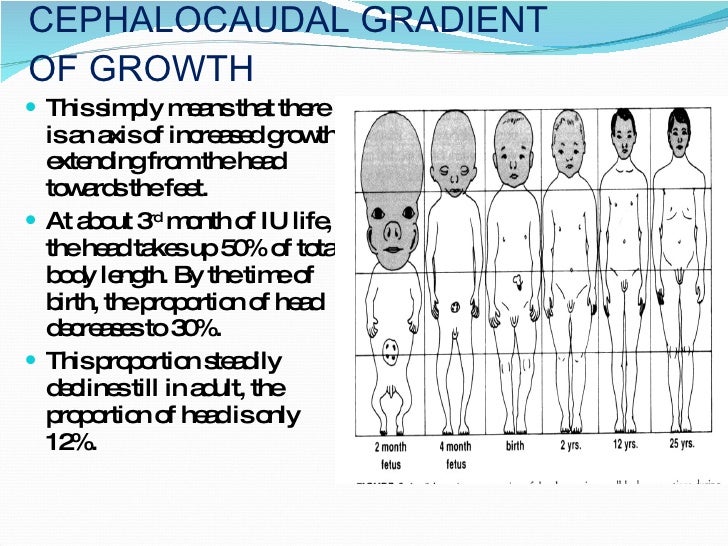
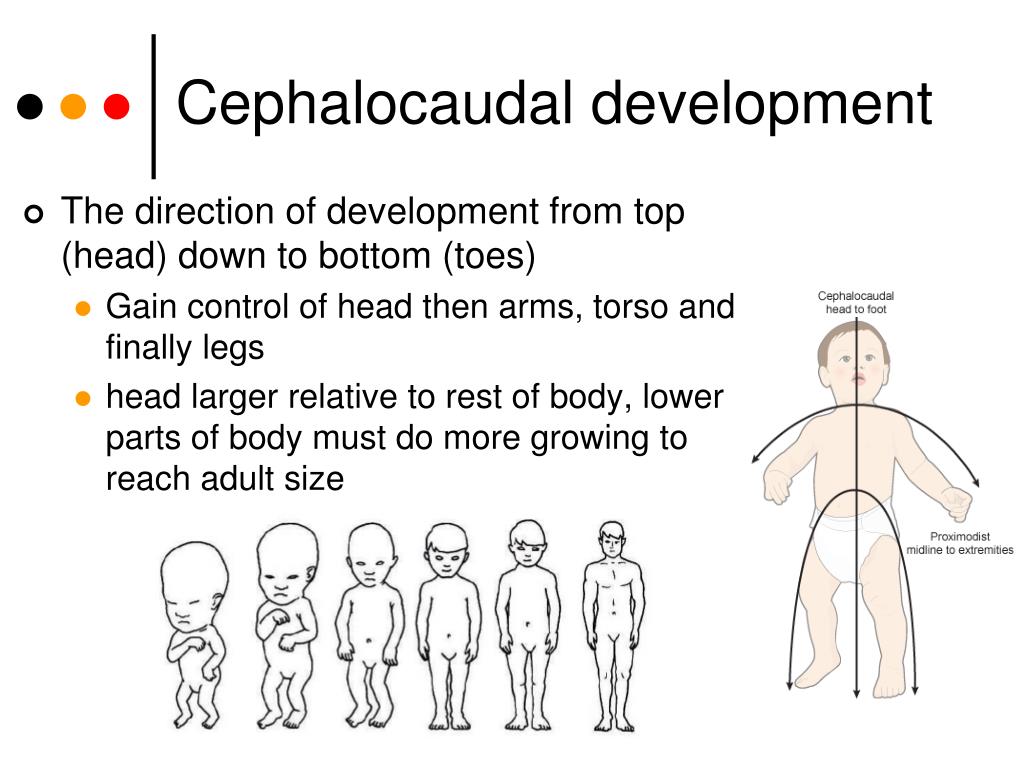
Cephalocaudal Growth Pattern - The regulation occurs through signaling between cells and tissues and responses in the form of. In an infant’s head, the head develops much more quickly than the legs, so this pattern is important in predicting how the child will grow. Web the cephalocaudal principle states that growth follows a direction and pattern that begins with the head and upper body parts and then proceeds to the rest of the body. Web the cephalocaudal gradient of growth or cephalocaudal trend refers to the body’s changing growth patterns, and spatial proportions, over time. For example, neck and should muscles will develop before the lower limbs. This allows the infant to turn and lift their head, as is required for seeking nourishment from the mother. Web this developmental pattern, called “cephalocaudal,” explains why babies tend to crawl forward, then roll backwards to get on their tummies and start moving again. Web the cephalocaudal trend, or cephalocaudal gradient of growth, refers to the pattern of changing spatial proportions over time during growth. This can be seen in human fetuses where the head is the first body part formed. Typically this is referencing changes or growth in a top to bottom manner (cephalo = head; In addition, growth proceeds at different rates during different stages of development. One example of this is the gradual change in head size relative to body size during human growth. Once the body is formed the hands develop before. Web study with quizlet and memorize flashcards containing terms like cephalocaudal growth pattern, proximodistal growth pattern, 3 major areas of physical development and more. For example, infants may use their upper limbs before their lower limbs. Web the cephalocaudal principle states that growth follows a direction and pattern that begins with the head and upper body parts and then proceeds to the rest of the body. The regulation occurs through signaling between cells and tissues and responses in the form of. Children often appear “top heavy” with their heads proportionally larger than their bodies. Web these changes in segment mass and distribution of mass (moments of inertia) are partially consistent with the principles of cephalocaudal and distal to proximal development [ 6, 7 ], as indicated by differential growth. Web the cephalocaudal trend, or cephalocaudal gradient of growth, refers to the pattern of changing spatial proportions over time during growth. Cephalocaudal development is also called “rudimentary” or “anteroposterior.” Once the body is formed the hands develop before. Web the cephalocaudal principle states that growth follows a direction and pattern that begins with the head and upper body parts and then proceeds to the rest of the body. Web cephalocaudal development refers to a similar progression of growth that occurs from. Web the cephalocaudal pattern of growth is growth from the head down. Web these changes in segment mass and distribution of mass (moments of inertia) are partially consistent with the principles of cephalocaudal and distal to proximal development [ 6, 7 ], as indicated by differential growth. The proximodistal trend, on the other hand, acknowledges growth from the center of. Web example of cephalocaudal development this image of cephalocaudal development depicts the growth and development that the infant goes through, beginning from the head and ending in the feet and toes, whilst portraying the time span that the development occurs. This allows the infant to turn and lift their head, as is required for seeking nourishment from the mother. Web. Web example of cephalocaudal development this image of cephalocaudal development depicts the growth and development that the infant goes through, beginning from the head and ending in the feet and toes, whilst portraying the time span that the development occurs. The proximodistal trend, on the other hand, acknowledges growth from the center of the body outwards. Web cephalocaudal development describes. Cephalocaudal development is also called “rudimentary” or “anteroposterior.” One example of this is the gradual change in head size relative to body size during human growth. Web the cephalocaudal growth pattern is a pattern of development that starts at the head and moves to the extremities. Children often appear “top heavy” with their heads proportionally larger than their bodies. Web. The cephalocaudal is a top to bottom principle, where development starts at the top and. Web cephalocaudal development describes the general growth pattern of organisms to develop areas near the main neural area (typically the head) earlier than areas of the body that are more distant. The most obvious example of this is how a child’s head, which seems disproportionately. This pattern of growth is seen primarily in humans, where the head is the first body part to form in the fetus. Web this developmental pattern, called “cephalocaudal,” explains why babies tend to crawl forward, then roll backwards to get on their tummies and start moving again. Web the cephalocaudal principle states that growth follows a direction and pattern that. Cephalocaudal development is also called “rudimentary” or “anteroposterior.” Growth proceeds downward, first from the head, then to the trunk region, and last to the feet. Web there are two important trends: The proximodistal trend, on the other hand, acknowledges growth from the center of the body outwards. One example of this is the gradual change in head size relative to. Cephalocaudal development refers to the pattern of growth from the head down, also referred to as development from head to toe. For example, neck and should muscles will develop before the lower limbs. In an infant’s head, the head develops much more quickly than the legs, so this pattern is important in predicting how the child will grow. The most. Web cephalocaudal development describes the general growth pattern of organisms to develop areas near the main neural area (typically the head) earlier than areas of the body that are more distant. The regulation occurs through signaling between cells and tissues and responses in the form of. This allows the infant to turn and lift their head, as is required for. The proximodistal trend, on the other hand, acknowledges growth from the center of the body outwards. Web this developmental pattern, called “cephalocaudal,” explains why babies tend to crawl forward, then roll backwards to get on their tummies and start moving again. This pattern of growth is seen primarily in humans, where the head is the first body part to form in the fetus. Web the cephalocaudal pattern of growth is growth from the head down. Cephalocaudal development is also called “rudimentary” or “anteroposterior.” In addition, growth proceeds at different rates during different stages of development. It is most obviously observed in infants' spatial. Web the cephalocaudal growth pattern is a pattern of development that starts at the head and moves to the extremities. Web cephalocaudal development describes the general growth pattern of organisms to develop areas near the main neural area (typically the head) earlier than areas of the body that are more distant. Web the cephalocaudal principle states that growth follows a direction and pattern that begins with the head and upper body parts and then proceeds to the rest of the body. Web these changes in segment mass and distribution of mass (moments of inertia) are partially consistent with the principles of cephalocaudal and distal to proximal development [ 6, 7 ], as indicated by differential growth. Once the body is formed the hands develop before. The cephalocaudal is a top to bottom principle, where development starts at the top and. Web cephalocaudal development is the process by which organisms grow and develop with a focus on the head area before other parts of the body. One example of this is the gradual change in head size relative to body size during human growth. The most obvious example of this is how a child’s head, which seems disproportionately large when compared to the infant’s body gradually becomes proportional as the child’s body grows.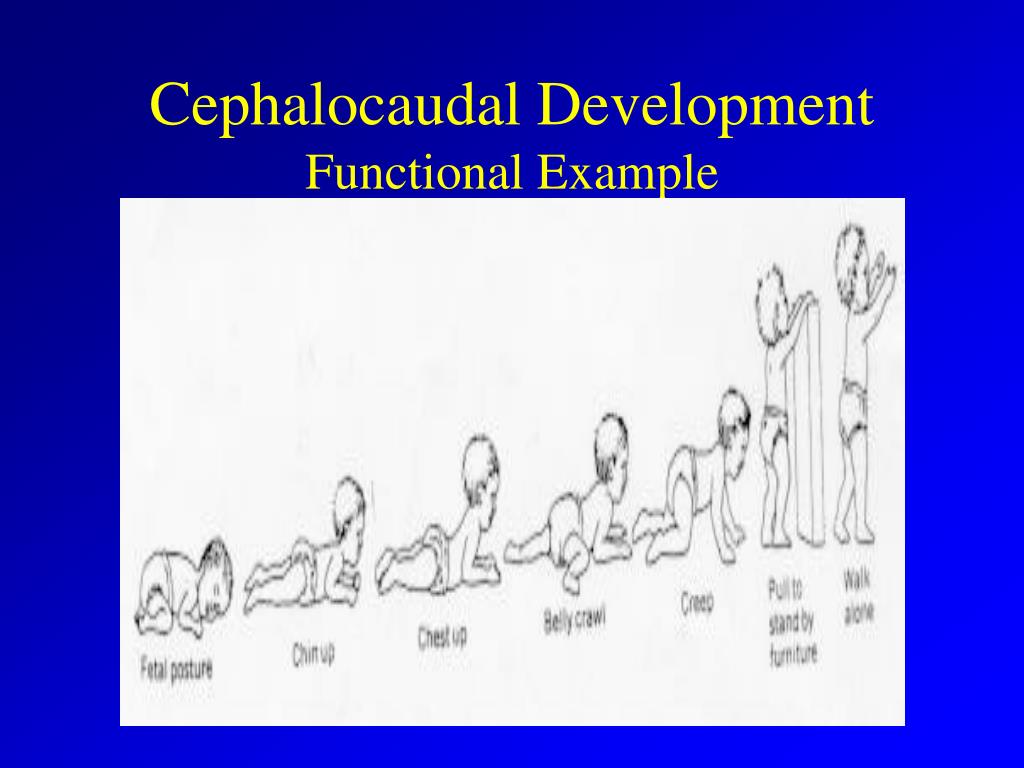
PPT Principles of Physical Development PowerPoint Presentation, free
PPT Physical Development in Infancy PowerPoint Presentation ID242878
[Solved] In a short bond paper, illustrate the cephalocaudal pattern

Diagrammatic representation of the Cephalocaudal growth pattern. Note

PPT Principles of Physical Development PowerPoint Presentation, free

DIFFERENTIAL GROWTH Cephalo caudal Gradient & Scammon's Growth Curve

PPT The Interrelationships Between Health and Physical, Social

cephalocaudal pattern YouTube
Growth Development Of Face And Oral Cavity
What Is Proximodistal Law Of Development
Typically This Is Referencing Changes Or Growth In A Top To Bottom Manner (Cephalo = Head;
Web Cephalocaudal Development Refers To A Similar Progression Of Growth That Occurs From Head To Toe.
Web If A Pattern Of Growth And Development Is Cephalocaudal, This Means It Develops From The Head To The Feet.
For Example, Neck And Should Muscles Will Develop Before The Lower Limbs.
Related Post: