
Diamond Bottom Pattern
Diamond Bottom Pattern - The diamond pattern has a reversal characteristic: Web diamond bottom pattern on a chart. It is formed by a series of higher highs and lower lows, creating a symmetrical shape that resembles a diamond. Web the diamond bottom pattern is a reversal pattern that forms at the bottom of a downtrend, signaling a potential reversal and uptrend. The price reversal happens after the formation of the top and bottom at point d. Diamond patterns often emerging provide clues about future market movements. Considered a bullish pattern, the diamond bottom pattern will show a reversal of a trend that breaks out from a downward (bearish) momentum into an upward (bullish) momentum. Typically we will see a strong price move lower, and then a consolidation phase that carves out the up and down swing points of the diamond bottom. Then the trading range gradually narrows after the highs peak and the lows start trending upward. Web the diamond pattern is a reversal indicator that signals the end of a bullish or bearish trend. This gives the pattern v and inverted v like structure. It is most commonly found at the top of uptrends but may also form near the bottom of bearish trends. Web the diamond bottom pattern is a powerful chart formation that signals a bullish trend reversal in forex trading. It is considered a rare but reliable pattern. The technical event occurs when prices break upward out of the diamond formation. This pattern marks the exhaustion of the selling current and investor indecision. A diamond bottom is formed by two juxtaposed symmetrical triangles, so forming a diamond. Web diamond bottom pattern on a chart. Typically we will see a strong price move lower, and then a consolidation phase that carves out the up and down swing points of the diamond bottom. Bullish diamond pattern (diamond bottom) bearish diamond pattern (diamond top) A diamond bottom is formed by two juxtaposed symmetrical triangles, so forming a diamond. Web bullish diamond patterns are known as diamond bottom. A diamond bottom is formed by two juxtaposed symmetrical triangles, so forming a diamond. Web the diamond bottom pattern is a technical analysis tool indicative of a potential reversal in market trends. This gives the pattern v. A diamond bottom has to be preceded by a bearish trend. This article will explore the diamond chart patterns and how they are formed. Web a diamond bottom is a bullish, trend reversal chart pattern. Web diamond bottoms are diamond shaped chart patterns. Then the trading range gradually narrows after the highs peak and the lows start trending upward. Diamond patterns often emerging provide clues about future market movements. Web a bullish diamond pattern variety, also referred to as a diamond bottom, occurs in the context of a downtrend. Web first, a diamond top pattern happens when the asset price is in a bullish trend. The bullish diamond pattern and the bearish diamond pattern. This pattern begins by widening. Web the bullish diamond pattern, sometimes referred to as a diamond bottom pattern, forms during a clear downtrend signaling the potential end of the broader downward momentum, offering traders an opportunity to enter a long position in anticipation of an eventual upside breakout. Web the diamond bottom pattern occurs because prices create higher highs and lower lows in a broadening. Web a diamond bottom is a bullish, trend reversal, chart pattern. A diamond bottom has to be preceded by a bearish trend. It suggests a shift from a downtrend to an uptrend. Web the diamond pattern is a reversal indicator that signals the end of a bullish or bearish trend. This pattern marks the exhaustion of the selling current and. A diamond bottom has to be preceded by a bearish trend. Web the diamond bottom pattern is a reversal pattern that forms at the bottom of a downtrend, signaling a potential reversal and uptrend. The bullish diamond pattern and the bearish diamond pattern. This pattern begins by widening out at the bottom as sellers are losing control and buyers begin. It usually forms at the low point of decline and is seen as relatively uncommon compared to other chart patterns. Web the diamond pattern is a rare, but reliable chart pattern. Read more for performance statistics and trading tactics, written by internationally known author and trader thomas bulkowski. Web the diamond top pattern is a bearish reversal pattern, while the. This leads to two distinct diamond patterns: Diamond bottoms form at a market bottom at the end of a bearish trend and are a bullish signal. Then the trading range gradually narrows after the highs peak and the lows start trending upward. A diamond bottom has to be preceded by a bearish trend. The technical event occurs when prices break. A diamond bottom has to be preceded by a bearish trend. Web a diamond top formation is a technical analysis pattern that often occurs at, or near, market tops and can signal a reversal of an uptrend. Web the bullish diamond pattern, sometimes referred to as a diamond bottom pattern, forms during a clear downtrend signaling the potential end of. Web a diamond bottom is a bullish, trend reversal chart pattern. Web the diamond bottom pattern is a technical analysis tool indicative of a potential reversal in market trends. Diamond patterns often emerging provide clues about future market movements. Web bullish diamond patterns are known as diamond bottom. Web a diamond bottom pattern is a bullish pattern that signals a. The diamond pattern has a reversal characteristic: A diamond bottom is formed by two juxtaposed symmetrical triangles, so forming a diamond. It is considered a rare but reliable pattern. Web the diamond chart pattern is a technique used by traders to spot potential reversals and make profitable trading decisions. Typically we will see a strong price move lower, and then a consolidation phase that carves out the up and down swing points of the diamond bottom. However, it could easily be mistaken for a head and shoulders pattern. This gives the pattern v and inverted v like structure. It usually forms at the low point of decline and is seen as relatively uncommon compared to other chart patterns. A diamond bottom has to be preceded by a bearish trend. Considered a bullish pattern, the diamond bottom pattern will show a reversal of a trend that breaks out from a downward (bearish) momentum into an upward (bullish) momentum. A diamond bottom is formed by two juxtaposed symmetrical triangles, so forming a diamond. Diamond bottoms form at a market bottom at the end of a bearish trend and are a bullish signal. Bullish diamond pattern (diamond bottom) bearish diamond pattern (diamond top) Web the diamond pattern is a rare, but reliable chart pattern. A diamond bottom has to be preceded by a bearish trend. The highs and lows of a price in diamond top and bottom can be seen as four points (a, b, c, and d), forming peaks and troughs.
Diamond bottom efficient Forex pattern Litefinance

Diamond Pattern Trading Explained
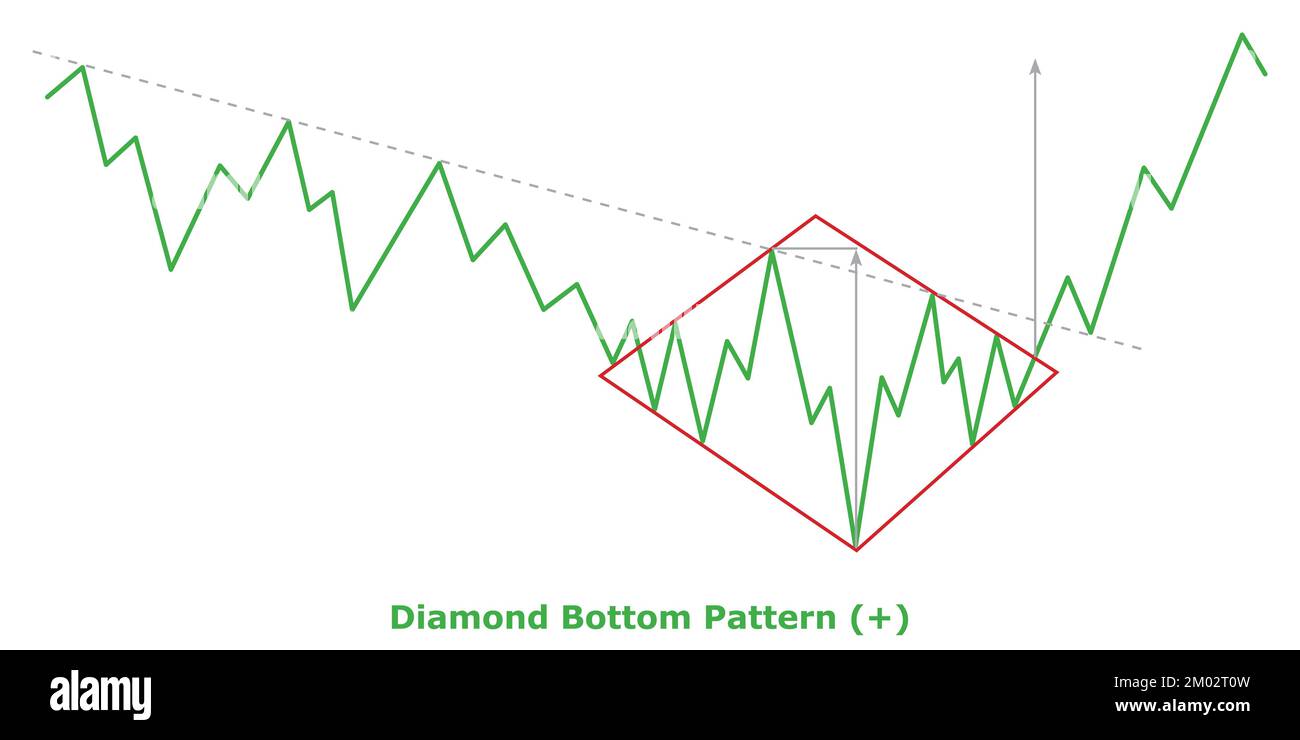
Diamond Bottom Pattern Bullish (+) Green & Red Bullish Reversal
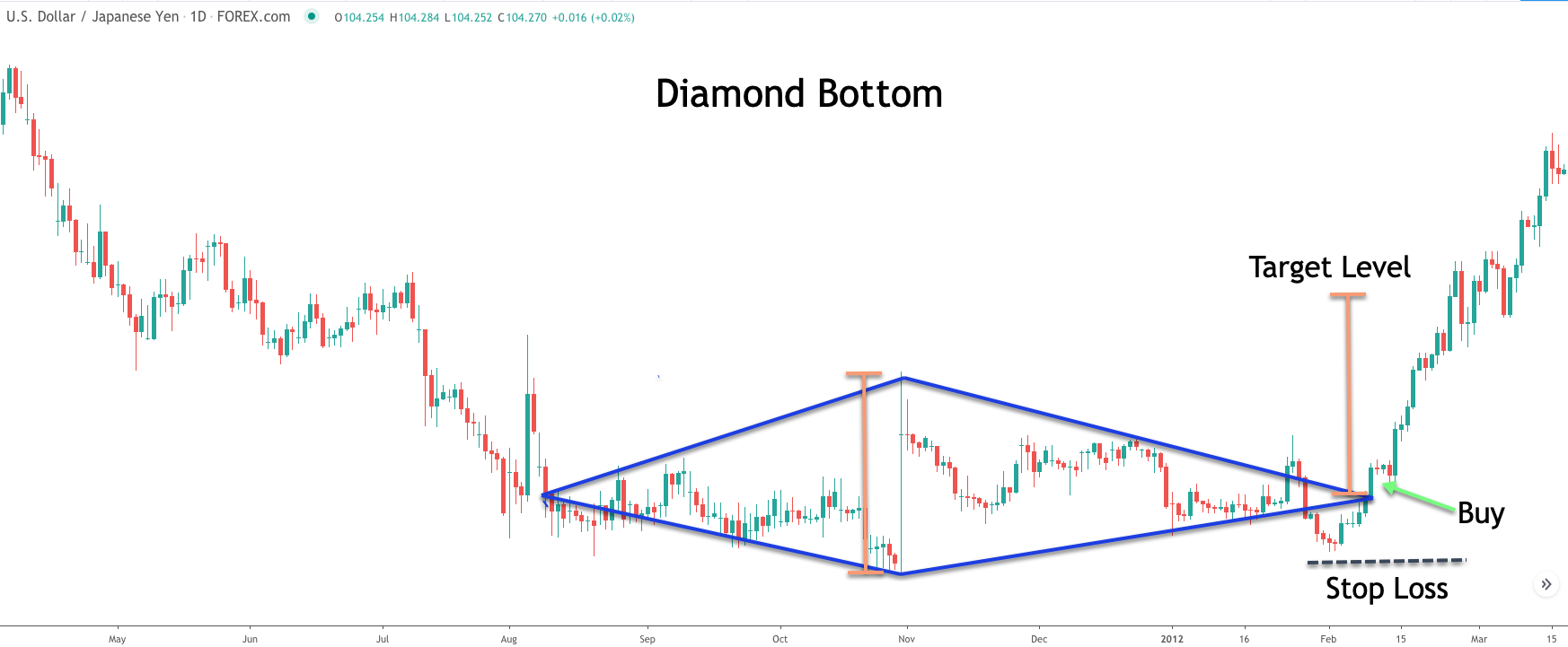
Diamond Chart Pattern Explained Forex Training Group
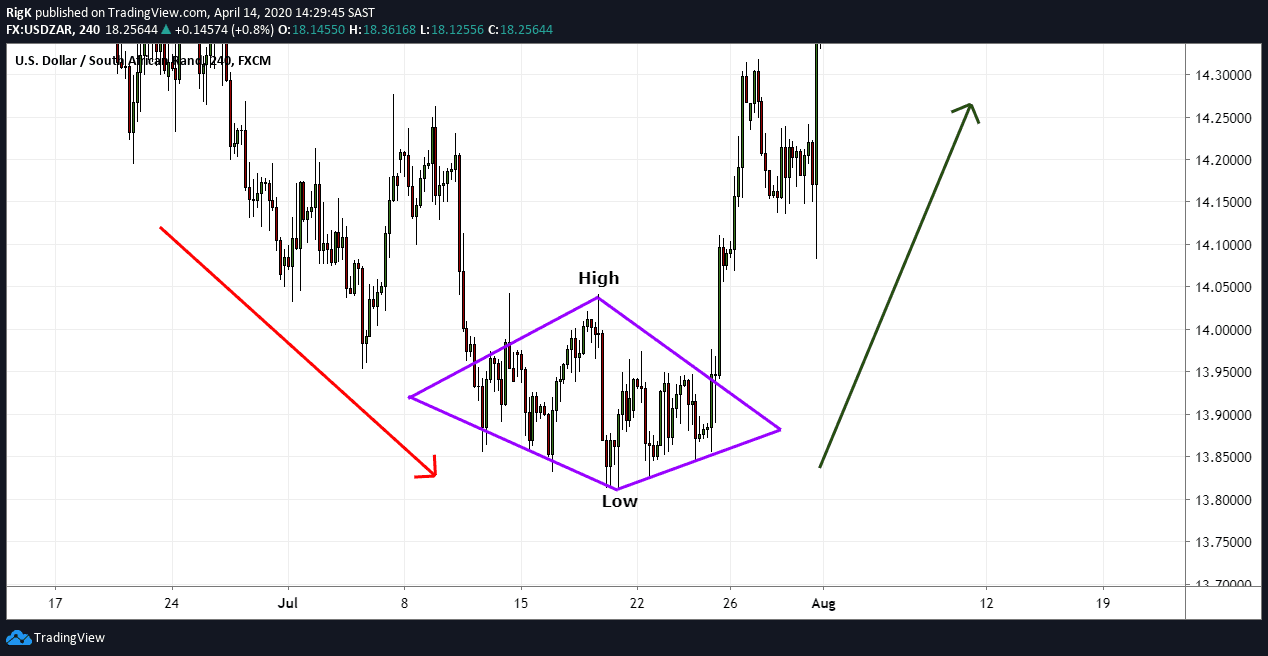
Diamond Bottom Pattern Definition & Examples
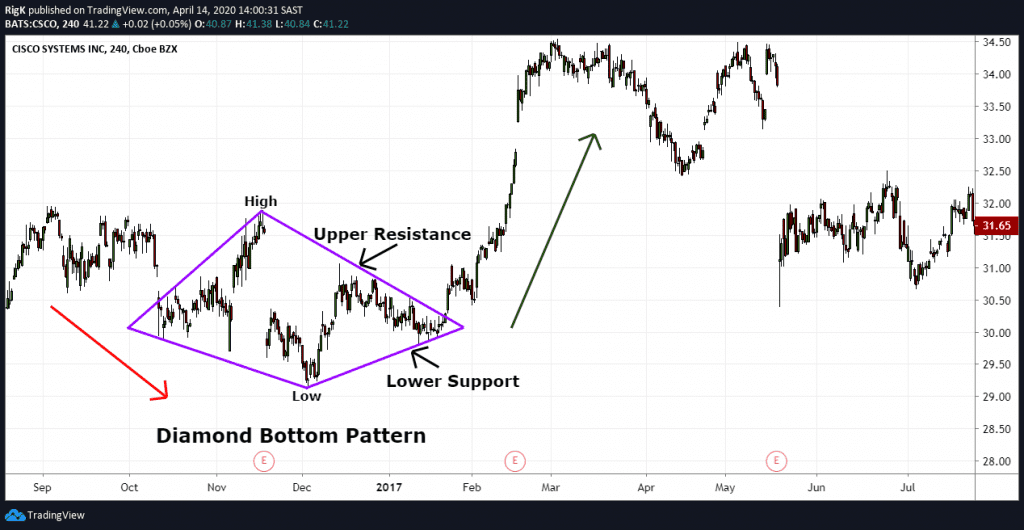
What Are Chart Patterns? (Explained)
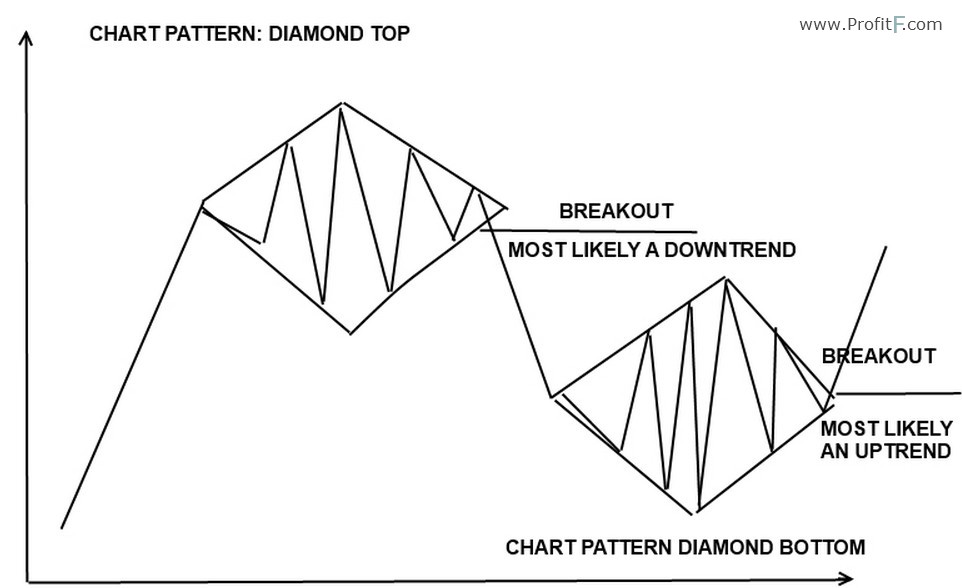
Diamond Reversal Chart Pattern in Forex technical analysis
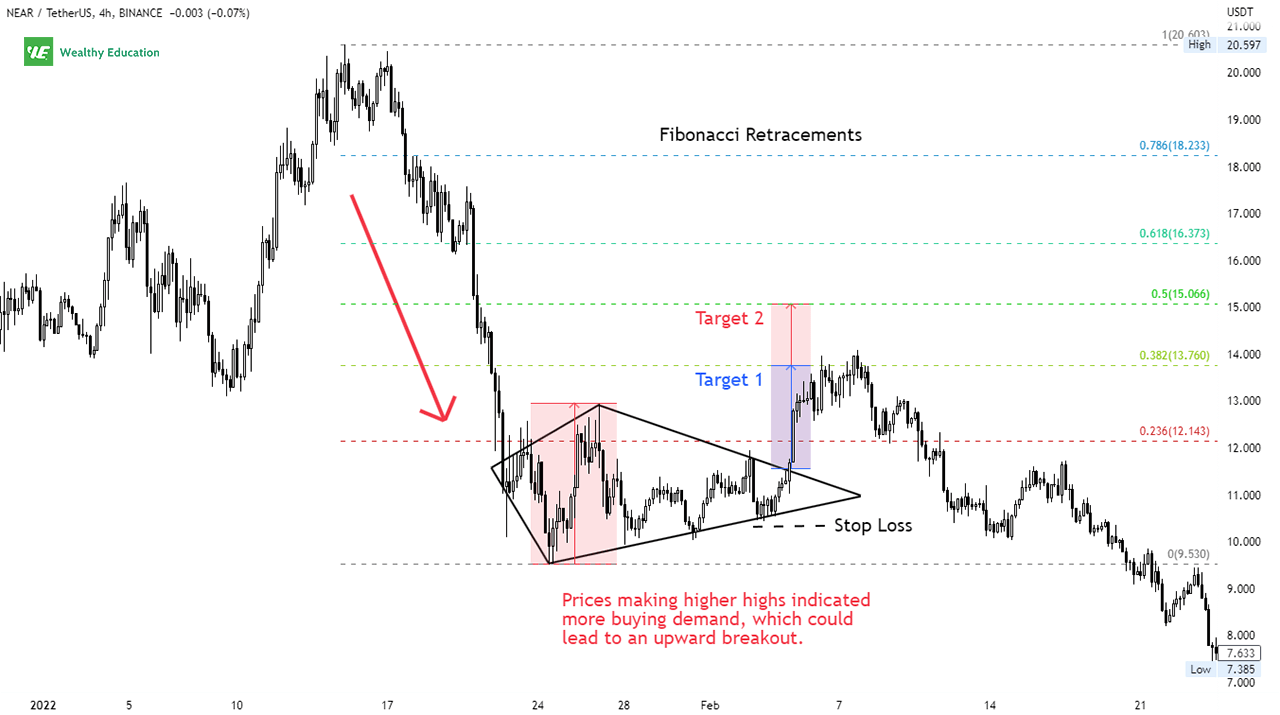
Diamond Bottom Pattern (Updated 2022)
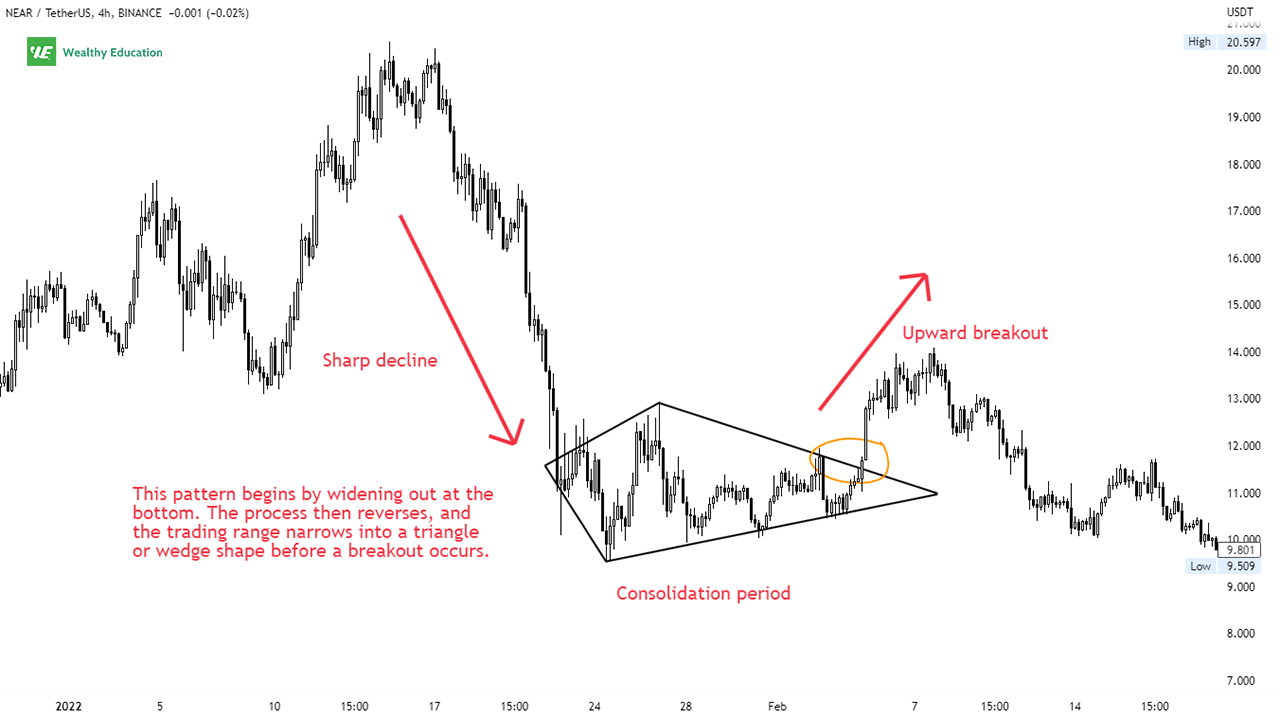
Diamond Bottom Pattern (Updated 2023)
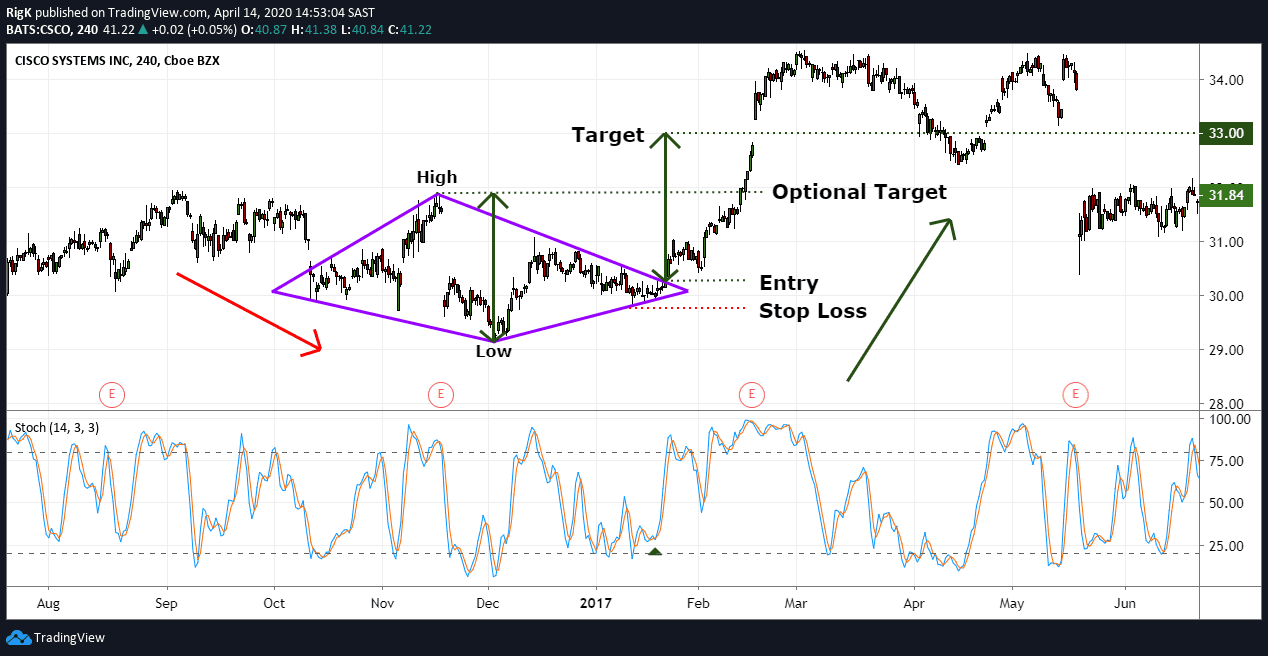
Diamond Bottom Pattern Definition & Examples
Diamond Patterns Often Emerging Provide Clues About Future Market Movements.
The Netflix Example, Is A Diamond Bottom Pattern.
This Leads To Two Distinct Diamond Patterns:
Web The Diamond Bottom Pattern Is A Powerful Chart Formation That Signals A Bullish Trend Reversal In Forex Trading.
Related Post: